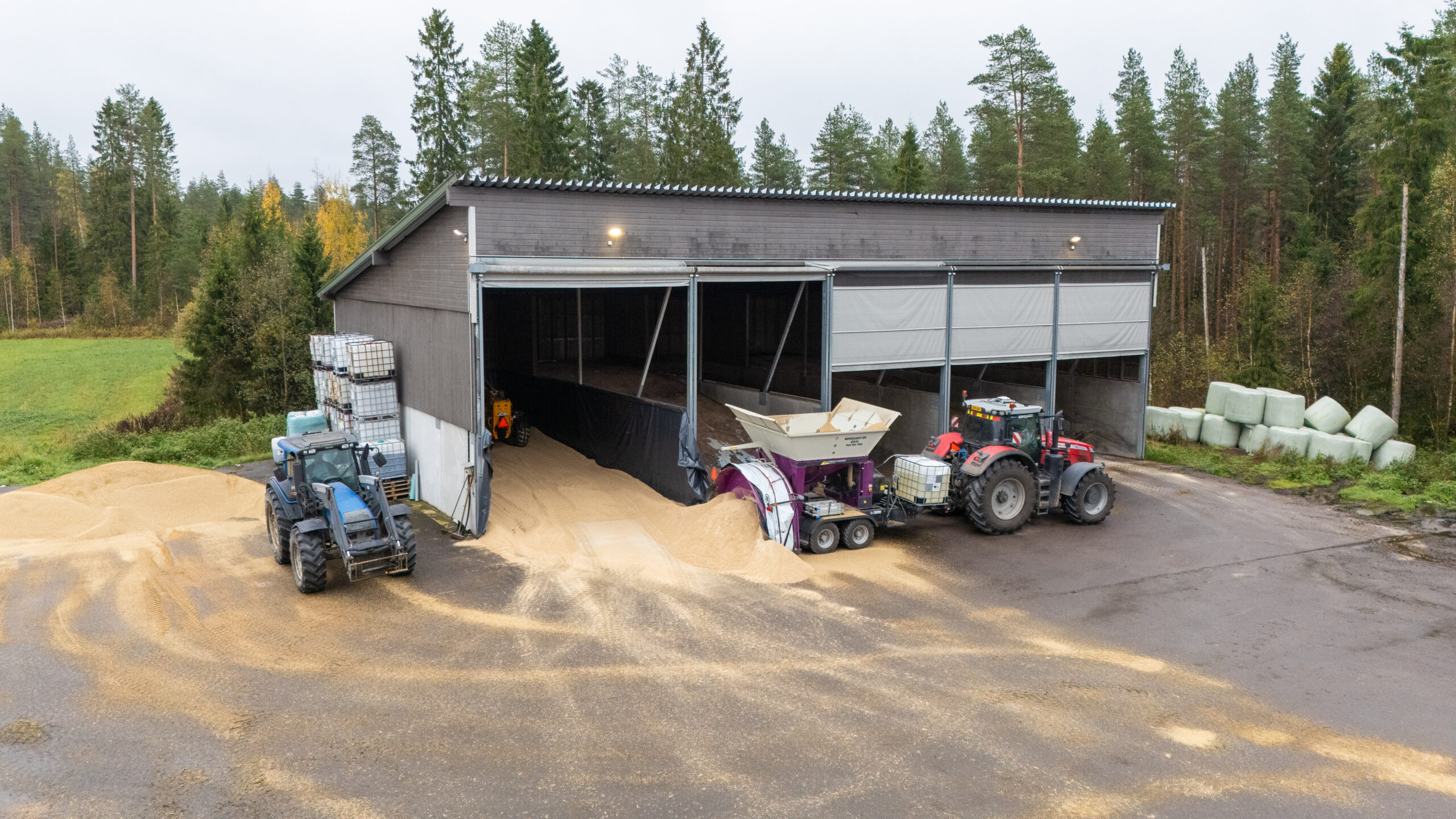
Dust production is one of the most significant challenges when grinding grain with hammer mills, affecting both operational efficiency and workplace safety. Excessive grain dust not only creates health hazards for operators but also reduces the quality of the final product and can lead to equipment wear and fire risks.
Understanding the root causes of dust generation and implementing proper control measures can dramatically improve your hammer mill operation. From equipment setup to environmental controls, several proven strategies can help minimize dust while maintaining optimal grinding performance.
What causes dust when grinding grain with hammer mills?
Dust formation in hammer mills occurs primarily due to the high-impact grinding action that creates fine particles, combined with the airflow generated by the rotating hammers. The hammers strike grain at high speeds, creating both the desired particle size and unwanted fine dust that becomes airborne through the mill’s internal air circulation.
Several factors contribute to excessive dust production during hammer mill operation. Hammer design and condition play a crucial role, as worn or damaged hammers create more irregular particle sizes and generate additional fines. Screen selection significantly impacts dust levels, with screens that are too fine or damaged causing overgrinding and increased dust formation.
The mill’s internal airflow patterns also affect dust generation. Hammer mills create substantial air movement as the rotor spins, and this airflow can carry fine particles throughout the grinding chamber and beyond. Poor mill housing seals allow dust to escape into the surrounding work area, while inadequate ventilation systems fail to capture dust at the source.
Operating parameters such as rotor speed, feed rate, and grain characteristics further influence dust production. Running the mill at excessive speeds or with inconsistent feed rates can create more fines than necessary, while certain grain types naturally produce more dust during processing.
How can you reduce dust through proper hammer mill setup?
Proper hammer mill configuration significantly reduces dust production by optimizing the grinding process and controlling particle size distribution. Key setup adjustments include selecting appropriate screen sizes, maintaining correct hammer-to-screen clearances, and ensuring the proper rotor speed for your specific grain type and desired particle size.
Screen selection is critical for dust control. Using screens with larger openings than necessary reduces overgrinding and fine particle generation. Screen condition must be monitored regularly, as worn or damaged screens create irregular particle flow and increased dust. Maintaining proper hammer-to-screen clearance, typically 3–6 mm depending on the application, ensures efficient grinding without excessive fines production.
Rotor speed optimization balances grinding efficiency with dust control. Operating at the manufacturer’s recommended speed for your specific grain type prevents overprocessing while maintaining adequate throughput. Higher speeds do not always mean better performance and often result in increased dust generation.
Regular hammer maintenance prevents dust issues caused by worn components. Sharp, properly balanced hammers create clean cuts rather than a crushing action, reducing fine particle generation. We recommend establishing a systematic hammer inspection schedule to maintain optimal grinding conditions and minimize dust production.
What dust collection systems work best for hammer mills?
Cyclone separators combined with fabric filter collectors provide the most effective dust control for hammer mill operations. This two-stage system first removes larger particles through centrifugal action, then captures fine dust particles through fabric filtration, achieving collection efficiencies above 99% when properly sized and maintained.
The primary dust collection component should be a cyclone separator positioned immediately after the hammer mill. Cyclones effectively remove particles larger than 10 microns and reduce the load on secondary filtration equipment. Proper sizing ensures adequate air velocity for particle separation without creating excessive system pressure drop.
Secondary filtration through baghouse or cartridge collectors captures remaining fine particles. Pulse-jet cleaning systems maintain filter efficiency by automatically removing accumulated dust from filter elements. The dust collection system must be sized for both the mill’s air volume requirements and the expected dust loading from your specific grain types.
Proper ductwork design ensures effective dust capture and transport. Smooth transitions, adequate air velocity (typically 3,500–4,000 feet per minute for grain dust), and minimal horizontal runs prevent dust from settling and causing system blockages. Strategic placement of collection points at dust generation sources maximizes capture efficiency.
How does grain moisture content affect dust production?
Grain moisture content directly influences dust generation, with drier grains typically producing significantly more dust during hammer mill processing. Grains with moisture levels below 12% tend to create more fine particles and airborne dust, while slightly higher moisture content (14–16%) can reduce dust formation by improving particle cohesion.
Low-moisture grain becomes more brittle and fractures into smaller particles during the grinding process. This brittleness leads to increased fine particle generation and higher dust levels throughout the mill system. The dry particles also become more easily airborne due to reduced surface tension and particle binding.
Optimal moisture levels for dust control vary by grain type but generally fall between 13% and 15% for most cereals. At these levels, grain maintains enough flexibility to reduce excessive fragmentation while still allowing effective grinding. However, moisture content must be balanced against storage requirements and final product specifications.
Conditioning grain before processing can help control dust production. Adding small amounts of moisture or using grain conditioners can reduce dust while maintaining product quality. This approach requires careful monitoring to prevent mold growth or storage issues, but it can significantly improve working conditions and reduce cleanup requirements.