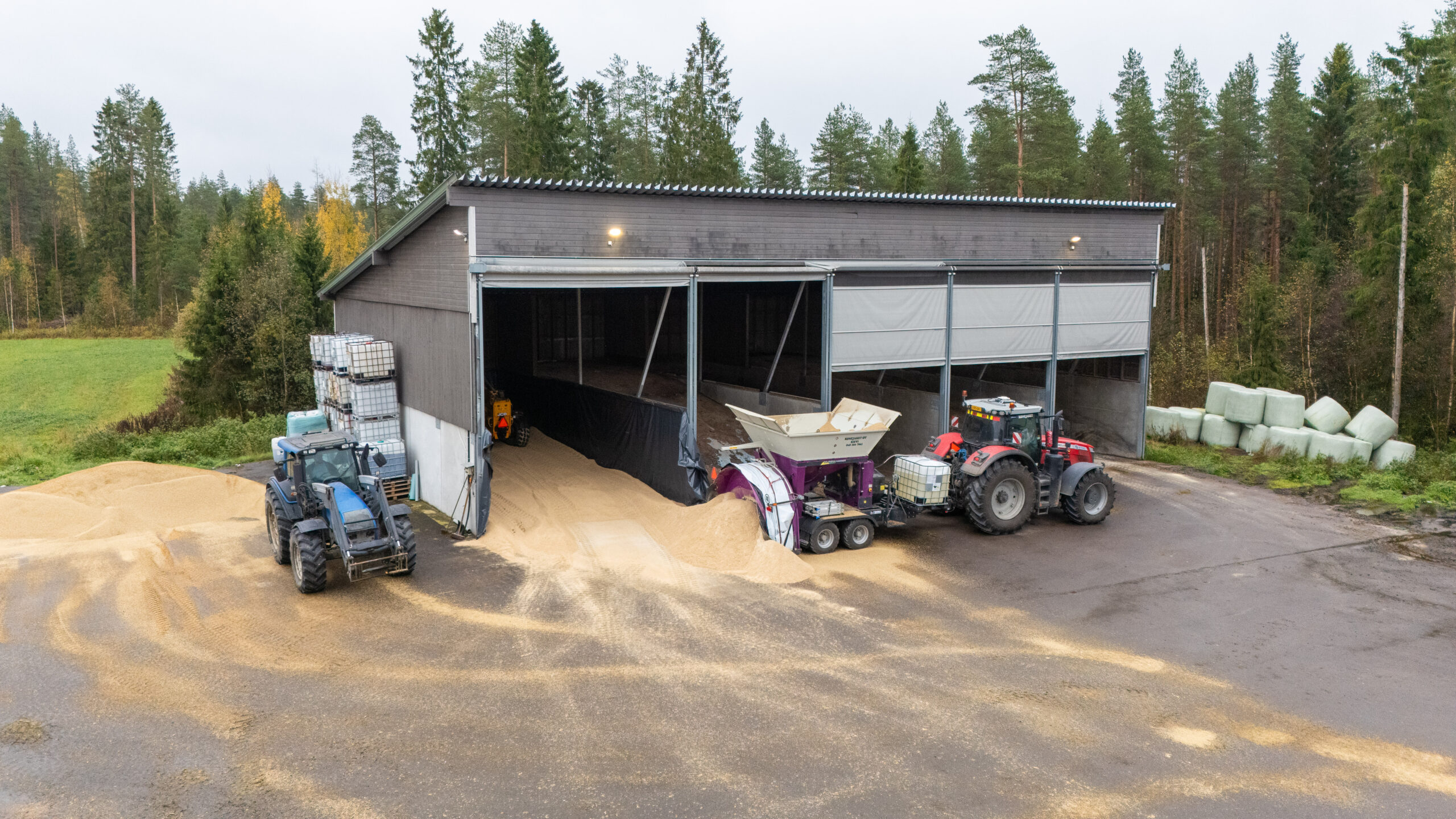
Finding the right feed mill is already a meaningful investment decision. When a farm also has limited building space, that decision becomes significantly more complex. The dimensions of a machine, its clearance requirements, and how it connects to existing grain storage can all determine whether a mill fits neatly into a workflow or creates daily frustration. For small and mid-sized farms working within tight structures, choosing the wrong mill type can mean costly modifications, awkward workarounds, or underused capacity.
The good news is that compact feed mill technology has advanced considerably, and there are genuine solutions designed with restricted footprints in mind. Understanding what drives those design choices, and how to match them to real farm conditions, makes the selection process far more straightforward.
Space Constraints That Shape Mill Selection
Limited building space affects more than just where a mill physically sits. It influences airflow around the machine, how grain is fed in, where processed feed exits, and whether maintenance can be performed safely without dismantling half the setup. A mill that technically fits a floor plan but leaves no working clearance around it creates real operational problems over time.
Ceiling height is another factor that often gets overlooked early in the planning stage. Some mill configurations require vertical space for gravity-fed hoppers or overhead conveyors. If the building has low roof beams or mezzanine floors, that narrows the field of suitable options considerably. Similarly, the location of electrical supply points and existing ventilation openings can either support or complicate installation. Mapping all of these physical constraints before shortlisting any machine saves significant time and avoids expensive surprises during setup.
Mill Types and Their Footprint Requirements
Different mill technologies occupy very different amounts of space, and each has a distinct physical profile that suits certain building layouts better than others.
Roller mills tend to have a relatively compact, upright form. The processing mechanism runs between two or more parallel rollers, which means the machine can be narrow while still delivering solid throughput. This makes roller mills a practical choice for farms where floor space is the primary constraint. The Murska 220 SM, for example, is a small electric roller mill designed specifically for daily feed production. It can be installed directly beneath a silo, which eliminates the need for a separate infeed conveyor and reduces the overall system footprint significantly.
Hammer mills generally require more space around the unit because of the airflow and dust management systems they depend on. The high-speed rotor creates significant airflow that must be directed and filtered, which typically means additional ducting and collection equipment. These systems can be highly effective for certain grain types, but the supporting infrastructure adds to the total installation area.
Disc mills occupy a middle ground in terms of size, though their suitability depends heavily on the grain type being processed. For farms handling a variety of feedstocks, including legumes like field beans or peas, a disc mill or a dedicated pre-crusher used alongside a roller mill can be a more space-efficient solution than running two separate full-size machines.
Key Specs to Measure Before Choosing a Mill
Before evaluating any specific machine, it helps to gather precise measurements of the available space and cross-reference them against the specifications that actually determine fit. The machine dimensions listed in a brochure represent the unit itself, not the full operational envelope.
The most important measurements to take include the clear floor area available, ceiling height at the intended installation point, door and access widths for bringing the machine in, and the distance to the nearest electrical supply. For electric mills, the capacity of the farm’s electrical connection is a hard limit. A 15 kW motor on a larger roller mill like the Murska 350 S2 requires a supply capable of handling that load reliably, and farms with older or lower-capacity connections may need to factor in an upgrade.
Beyond physical dimensions, consider the clearance needed on all four sides of the machine for safe operation and routine maintenance. Roller replacements, cleaning access, and inspection panels all require room to work. A minimum of 60 to 80 centimetres of clear space on service sides is a reasonable baseline to plan around, though specific models may require more or less.
How Compact Mill Design Affects Processing Capacity
A common concern on limited-space farms is that choosing a smaller machine means accepting lower output. In practice, the relationship between size and capacity is more nuanced than that, and modern compact designs often deliver more than their footprint suggests.
The Murska 220 SM, for instance, produces between 600 and 1,500 kilograms of processed grain per hour despite its small form factor. For farms with daily feed requirements in that range, this is entirely sufficient, and the machine’s ability to start even with grain already between the rollers makes it well-suited to automated or semi-automated feeding systems. The spring-loaded, hardened rollers and protective magnets also contribute to consistent output quality without requiring constant manual adjustment.
Where higher capacity is needed, larger electric roller mills scale up without necessarily demanding a proportionally larger building footprint. The key difference tends to be motor size and roller width rather than the overall machine envelope. Farms that need to process significantly more grain per hour can look at options like the Murska 700 HD or Murska 1000 HD with electric drive, which offer 20 and 30 tonnes per hour respectively, though these do require more space and a substantially larger electrical supply. The right balance between capacity and footprint depends on daily feed volumes, not peak theoretical output.
Installation Tips for Tight Farm Spaces
Careful planning before installation makes a significant difference in how well a compact mill integrates into a constrained building. A few practical approaches help avoid common problems.
Positioning the mill directly beneath an existing grain storage silo is one of the most effective ways to reduce the system’s total footprint. This eliminates a separate infeed conveyor run and takes advantage of gravity to feed grain into the machine. The Murska 220 SM is specifically engineered for this configuration, which makes it a natural fit for farms where the silo and processing area share the same building.
For farms where a direct silo connection is not possible, screw conveyors offer a compact way to move grain between storage and the mill. We offer motorised screw conveyors in 75 and 110 millimetre tube sizes that can be configured to suit different layouts, including tight corners and low ceiling runs. Combining a conveyor with the mill into a single planned system, rather than adding components reactively, keeps the overall installation tidy and reduces manual handling.
Electrical installation should always be planned in parallel with the mechanical layout. Running cabling after the machine is in place often results in awkward routing that complicates future maintenance. Discussing the full system layout with an installer before any equipment arrives on site saves time and reduces the risk of having to move the mill once it is set in position.
If you are working through the specifics of a mill installation on a space-limited farm, we are happy to help match the right solution to your building and daily feed requirements. Get in touch with us to discuss your situation directly.